
Create & Apply
Analyze & Prepare
Free Tools
All Free Tools
Browse keyword extractor, ATS checker, bullet rewriter, and more
Keyword Extractor
Extract skills and keywords from any job description
ATS Resume Checker
Check resume keyword match against a job description
Bullet Rewriter
Rewrite resume bullets with stronger impact
Summary Generator
Generate professional resume summary variants
Build your perfect tailored CV
Join thousands of professionals landing more interviews with AI-powered resumes.
Popular Roles
See real resumes that get interviews
Browse examples across every industry and role to inspire your own.
Find your perfect template
Professionally designed layouts ready to tailor to any job.
Learn & Explore
July 2, 2026
·7 min read
Is a Cover Letter Necessary? When Do You Need One in 2026?
Is a cover letter necessary? Do I really need one? Read our guide to find out when to include it in your job application and when you can skip it.
When you're applying for a job, you tailor your resume to match the job description, carefully complete every part of the application, and then you arrive at the cover letter section. And your strat questioning yourself, “Is a cover letter necessary?”
A cover letter can help you highlight your qualifications and show why you are the best fit for the role. While they aren’t always necessary, including one in your job application process can be beneficial.
And if you are not sure whether to include one, this guide will help you understand how necessary cover letters are, whether you really need one, when to skip them, and how to create a good one.
Is a Cover Letter Necessary?
The simple answer is: Yes.
It is the right chance to present yourself beyond your resume. Even when it’s not strictly required, a cover letter can significantly strengthen your application.
Many employers still expect or appreciate one, especially when applications are competitive.
What is The Purpose of a Cover Letter?
Cover letters are a good opportunity to expand your experience and your interest in the company. In most cases, they can increase your chances of landing a job interview.
Unlike a CV, which is more structured and straightforward, a cover letter lets you tell a short, focused story why you are a good fit for the role.
Tip: See the difference between resume and cover letter to know when and how to use each effectively.
Why are cover letters necessary? Do I really need one?
- According to a Resume Genius study, 94% of hiring managers claim cover letters impact their interview decisions.
- They showcase your passion and enthusiasm for the role. And this is what will set you apart from other applicants.
- They give you extra space to explain your experience in detail, meaning you’ve put in extra effort. Hiring managers appreciate this.
- They will help you stand out from other candidates. As more people rely on AI-generated applications, many CVs start to look similar. That’s why cover letters play a crucial role in making a strong first impression.
- You can provide more context. Especially if you are referred to the position, so this is a good place to mention that.
When Do I Need One?
You need a unique cover letter when:
- The job specifically requires one. If the job posting says a cover letter is required, don’t skip it. For some hiring managers, this is the first filter - to see if you have read the requirements.
- You’re very interested in the job position. When a job role feels like the right match for you, don’t hesitate and submit a tailored cover letter together with your resume. It shows why you want the job, and why that company specifically.
- You are new in this world, and want to make a good impression. If you are a beginner or have just graduated, a cover letter will help you bring in your motivation and enthusiasm.
- There are gaps in your work history. Instead of leaving a hiring manager to guess why you took time off, a cover letter lets you fill these gaps.
- If someone referred you to the role. This establishes a connection and explains how you learned about the opportunity.
- You are changing careers. A cover letter helps connect the dots by showing how your previous experience has prepared you for a new direction in your career.
When Not to Include?
Here are some situations when you don’t need a cover letter:
- The job description clearly indicates that it is not required. Sending one anyway won't usually hurt, but it's not going to help either, so focus on the main body of your letter.
- The application platform doesn’t provide an option to upload one. Some application systems simply don't have a field for it. If that's the case, don't force it.
- You have already spoken with the hiring manager. If you've had a conversation, interview, or call before applying, you can skip it to avoid repeating yourself.
- If you have a generic one that is not tailored to the job description. A cover letter that isn't tailored to the specific job can do more harm than good. If you don’t have the time to write it, better skip it.
How to Tailor a Cover Letter for Specific Job Requirements
So, you do need a cover letter for your application. How to tailor it to match the job description?
Here are some simple steps that will help you create an effective, tailored one:
1. The job description says it all
All you need is written in the job posting. Look no further.
Start by carefully reading the job description, required skills, and repeated phrases. These are your main clues for what the employer or hiring manager values the most.
2. Match your experience to their needs
Pick the best relevant achievements that are directly related to the job. Instead of listing all your accomplishments, be specific and quantify them.
For example, you can say: “Successfully managed a team of five and delivered three projects ahead of schedule, improving overall efficiency by 20%.”
3. Use the same language
This is the most important part to pass the ATS systems.
Use the same keywords from the job description, but naturally. You can find them in the qualifications, requirements, and skills sections.
This will help your cover letter be aligned and tailored to each job role.
4. Keep it short
Be specific and focused to make it easy to read. Keep it between 250-400 words or about 3-4 paragraphs, showing why you are a good fit for the role. Avoid writing weighty text or more pages.
5. End with a clear closing statement
Reinforce your interest and include a simple call to action, such as expressing enthusiasm for an interview.
Examples of Professional Cover Letters
To get some inspiration, you can take a look at the most used cover letter templates:
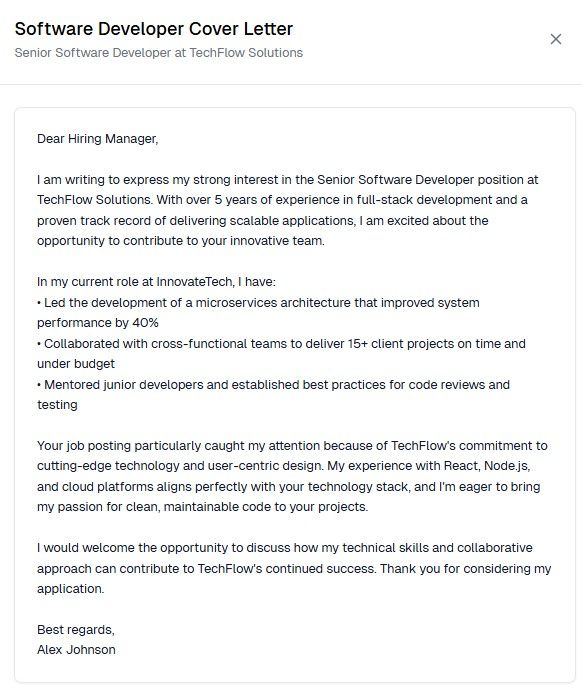
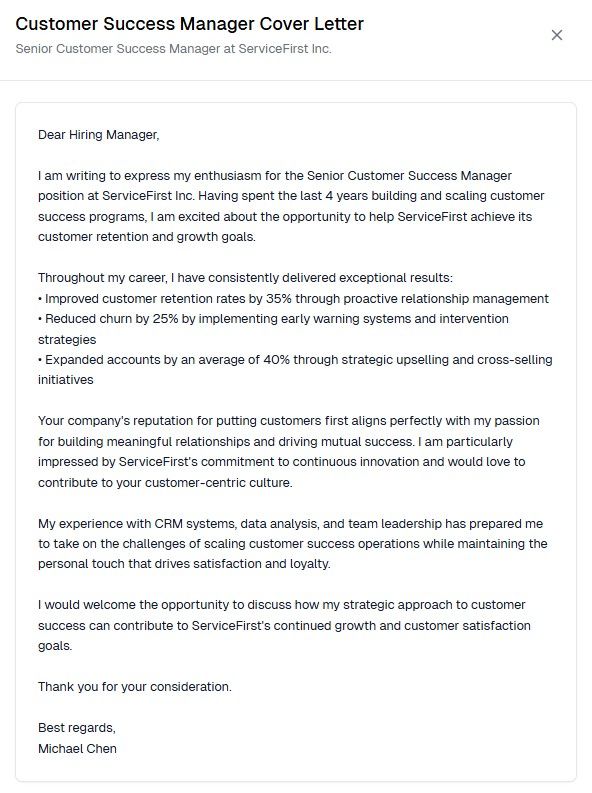
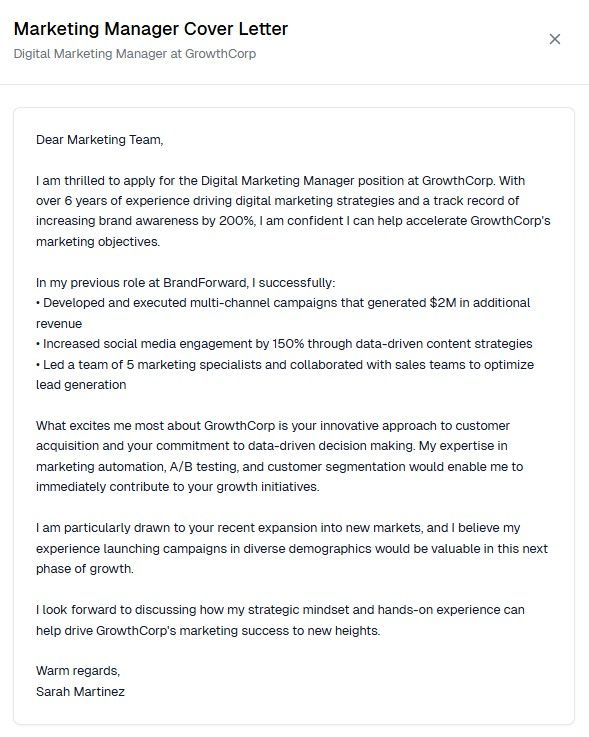
Or you can use one of the top cover letter generators in 2026 and start customizing it.
How Necessary Are Cover Letters?
Cover letters are necessary and worth the effort as they will boost your chances of landing more interviews. Even though many recruiters don’t read them, it is important to include one to increase your chances of passing the ATS filters.
If you want to start from scratch, or you already have one, you can use our AI cover letter generator that will create a cover letter tailored to your resume.
FAQs
How important is a cover letter?
Cover letter matters more than people think. It is a good opportunity to add more context about why you are a good fit for the role. Also, you can explain your story in detail in your own words. This will strengthen your overall job application.
Do I still need to write a cover letter for every job?
Not necessarily. If the job posting asks for one, you're excited about the role, or you're trying to explain something like a career change or employment gap, it's worth writing one. But if the job posting said specifically that a cover letter is not required, it is better to skip it.
When should I not attach a cover letter to my resume?
Skip it when the job description clearly states it isn't required, when there's no upload option in the application system, or when you've already spoken directly with the hiring manager.
Should I submit a cover letter even if it’s not required?
It depends on how much effort you put into it. If you have the time to write a tailored one that shows you are really motivated about the job, it can help you stand out from your competition. But if you have a generic, weak one, it won’t add much value. In this case, skip it because it can work against you.
Marija K.
LinkedIn ↗Legal Consultant & HR Specialist
Marija is a seasoned legal consultant and HR specialist with a passion for helping professionals craft standout CVs and navigate complex career transitions.
Ready to tailor your resume?
Let AI match your resume to any job description in seconds — and land more interviews.
Get started free →