
Create & Apply
Analyze & Prepare
Free Tools
All Free Tools
Browse keyword extractor, ATS checker, bullet rewriter, and more
Keyword Extractor
Extract skills and keywords from any job description
ATS Resume Checker
Check resume keyword match against a job description
Bullet Rewriter
Rewrite resume bullets with stronger impact
Summary Generator
Generate professional resume summary variants
Build your perfect tailored CV
Join thousands of professionals landing more interviews with AI-powered resumes.
Popular Roles
See real resumes that get interviews
Browse examples across every industry and role to inspire your own.
Find your perfect template
Professionally designed layouts ready to tailor to any job.
Learn & Explore
May 8, 2026
·8 min read
What Questions to Ask at the End of an Interview: 15 Impressive (+3 to Avoid)
At the end of every interview, the hiring manager asks, “Do you have any questions for me?”. Your response matters more than you may think.
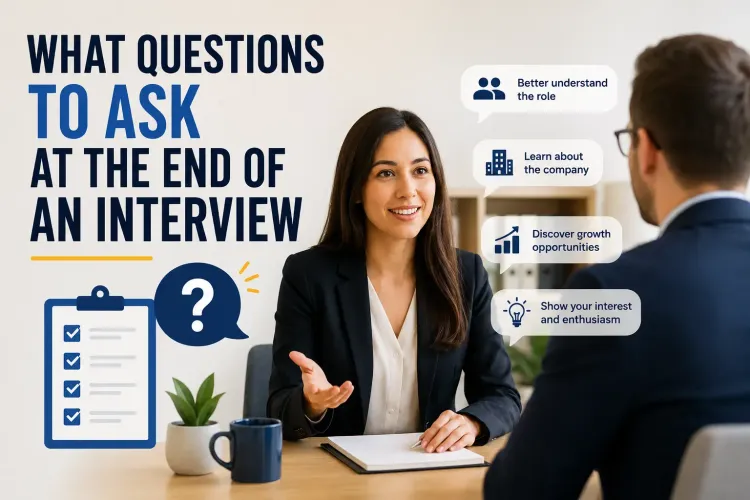
At the end of every interview, the hiring manager asks, “Do you have any questions for me?”. Your response matters more than you may think. The questions you ask can be just as important as the interview itself. They show that you care about your role, your motivation, and that you are really interested in the company’s culture.
Prepare smart and thoughtful questions in advance. Don’t forget that these questions will also help you decide whether you are a good fit for the role. Therefore, if you are struggling with what questions to ask at the end of an interview, we will help you choose the best ones and the ones you should avoid.
15 Best Questions to Ask at the End of a Job Interview
Interviewers don't just evaluate what you say. They evaluate what you're curious about and show how you want to contribute to the company. That's exactly the kind of person companies want to hire.
So let's get into it.
1. What do you love most about working here?
This one works every time.
Why?
Instead of you performing for them, you're inviting them to open up. People love talking about things they're passionate about, and their answers will tell you more about the company’s culture.
2. What are the biggest challenges of this role?
You want this job, but you also need to know what you're walking into. Asking about challenges shows the interviewer that you are eager to learn and want to solve any problems that come your way. You're not looking for an easy ride.
And the answer might surprise you because sometimes the biggest challenge isn’t mentioned in the job description.
3. How do you define/measure success in this role?
This is one of the most powerful questions you can ask.
It shows you are goal-oriented, and the answer you’ll get will give you a clear picture of what you'd be working toward.
Tip: If the interviewer can’t answer this question, it’s a red flag. A team that can't define what success looks like tends to struggle with feedback, too.
4. What are the next steps in the hiring process?
It is a simple and direct question. You want to know what happens next, and you want to show you’re serious and interested in the next part. And it also sets expectations for both sides.
5. What professional development opportunities are available?
Companies love candidates who want to grow.
Why?
Because a candidate who wants to develop is a candidate who plans to stay, learn, and improve. That's an investment that pays off for everyone. This question means that you are not looking only for a paycheck but also for a place where you will actually learn and build something.
6. Where do you see the company in the next 3–5 years?
Instead of you answering "where do you see yourself in five years," you're asking them. And the answer is useful, as it helps you figure out whether your goals are actually aligned with theirs. And whether this role has a future worth fighting for.
7. What is the typical career path for someone in this role?
This isn't just about promotion. The answer tells whether people who come in at this level tend to grow, move across teams, take on leadership, or do nothing. It gives you a realistic scene of what your next 2 or 3 years could look like if you take the job.
8. How would you describe the company's culture?
A good interviewer will give you something specific, like how decisions are made, how teams communicate, what's celebrated, and what's not. You will learn the work environment and determine whether the company’s culture aligns with your personality and career goals.
9. What are the biggest challenges the company is currently facing?
This one shows you're thinking strategically. It also gives you a chance to listen carefully and, if the conversation allows, to share how your experience might be relevant to those challenges.
10. What would the first 30-60 days look like in this role?
One of the most practical questions on this list. You want to know how your onboarding process will look. Will you be onboarded properly, or will you start working straight away?
The answer tells you a lot about how structured (or chaotic) the onboarding process is and how the company handles new hires.
11. Who would I be reporting to?
This question is especially important if you haven't met your direct manager yet. The relationship you have with your manager is one of the biggest factors in whether a job works out.
12. How will my performance be evaluated?
You want to know what the benchmarks are, how often reviews happen, what feedback looks like, and whether expectations are clear and measurable. It will help you learn how they measure your results and if there is room for growing.
13. What are some of the most interesting projects you've worked on here?
This question gives you insight into the kind of work you’ll actually be doing, and it gives your interviewer a chance to talk about something they're excited about.
14. Is there anything else I can clarify or provide to help with your decision?
If you ask this question at the end of the interview, it shows confidence that you’re not just trying to get through the conversation but also trying to earn the role.
15. What qualities/skills make someone most successful in this role?
This is different from asking about skills on the job description. It shows personality, work style, and mindset. The answers often reveal what the team actually values, what their past struggles were, and which skills are actually important for the role.
What Questions You Should NOT Ask an Interviewer
Now let's talk about the other side. You need to avoid some questions for the interviewer at the end, including:
1. "When can I take a vacation?"
We know that everyone needs days off. But asking this at your first interview will send the wrong signal. It suggests that your priority is to go on a vacation rather than to know about the job itself. Save this question for further in the hiring process.
2. "When will I get promoted?"
Ambition is great. Asking about promotions before you've started is not. This question raises immediate red flags for most hiring managers. It makes you seem impatient and focused on the title rather than the work.
Instead, ask about the typical career path for the role (question #7 above). Same goal, better framing.
3. Personal questions
It happens sometimes, but do not ask your interviewer about their salary, relationships with other teams in the company, or similar. It’s unprofessional and puts them in an uncomfortable position, reducing your chances of being hired. Keep it professional, relevant, and put the main focus on the role and the company.
Tips for Questions to Ask Interviewers at the End
If you don't know how to phrase your questions or how to get prepared, consider these several important factors:
- Ask the most relevant questions: Choose questions that the interviewer can answer with more than just a simple “yes” or “no”. They should be more concise and precise, so you can better understand the answer.
- Don’t ask all the right questions: Ask only 3 or 4 questions from the list above. It’s a good idea to prepare them in advance and, during the interview, choose the most appropriate ones based on the conversation.
- Avoid asking questions at any cost: If your questions were already answered during the interview, then don’t repeat yourself. You could tell them what you were planning to ask. This is helpful to avoid any misunderstandings and to better clarify certain things.
- Don’t ask about salary at the beginning: Wait until you are in the negotiation interview with HR. We know that the salary matters, but allow the interviewer to first see your value, then discuss the salary during the appropriate stage of the hiring process.
Practice Your Interview With TailoredCV
What questions to ask at the end of an interview can be overwhelming, especially if you are a beginner in this job-seeking journey. You can practice your interviewing skills, prepare some questions in advance, and get ready to master them. Our AI Interview tool can help you prepare for interviews with questions that actually reflect the role you are applying to. It stimulates real interview scenarios so you understand your weak points and how to better handle them.
All you need to do is upload your resume, add the job role, and start practicing the interview.
And if you want to make sure your resume is just as strong as your interview prep, check out our guides on how to write resumes that get you hired, together with good resume tips that will make you stand out.
Start today, and get instant feedback to strengthen your answers in your next interview.
Marija K.
LinkedIn ↗Legal Consultant & HR Specialist
Marija is a seasoned legal consultant and HR specialist with a passion for helping professionals craft standout CVs and navigate complex career transitions.
Ready to tailor your resume?
Let AI match your resume to any job description in seconds — and land more interviews.
Get started free →