
Create & Apply
Analyze & Prepare
Free Tools
All Free Tools
Browse keyword extractor, ATS checker, bullet rewriter, and more
Keyword Extractor
Extract skills and keywords from any job description
ATS Resume Checker
Check resume keyword match against a job description
Bullet Rewriter
Rewrite resume bullets with stronger impact
Summary Generator
Generate professional resume summary variants
Build your perfect tailored CV
Join thousands of professionals landing more interviews with AI-powered resumes.
Popular Roles
See real resumes that get interviews
Browse examples across every industry and role to inspire your own.
Find your perfect template
Professionally designed layouts ready to tailor to any job.
Learn & Explore
April 3, 2026
·6 min read
How to Write a Mechanical Engineer Resume + Tips
This comprehensive guide walks you through the latest trends, resume structure, and strategies to create a resume for mechanical engineer that will impress recruiters and hiring managers.

A tight resume is key for standing out in the competitive job market. Mechanical engineering has seen major transformations over the years, so it’s important that your resume reflects the trends and skills that are currently in demand. This comprehensive guide walks you through the latest trends, resume structure, and strategies to create a resume for mechanical engineer that will impress recruiters and hiring managers.
Key Resume Trends for Mechanical Engineers in 2026
Mechanical engineering today is less about just technical knowledge and more about how you apply it in real situations.
New Technology in Everyday Work
Modern engineering roles often involve working with automated systems, robotics, and data-based tools. You don’t need to be an expert in everything, but showing experience with modern tools or systems can help you stand out.
If you’ve worked on projects involving automation, robotics, or digital tools, make that easy to spot on your resume. Focus on what you did and what changed because of your work.
Focus on Sustainability
Companies are increasingly looking for engineers who think about efficiency and resource use. This could include reducing material waste, improving energy use, or designing products that last longer. If you’ve worked on anything like that, include it and explain the impact in simple terms.
Working With Different Teams
Mechanical engineers rarely work alone. You’ll often collaborate with people from other fields like software, electrical, or product teams. Highlight situations where you worked with others to complete a project. This could be group projects, internships, or workplace experience.
Soft Skills Matter
Technical skills are important, but employers also want people who can communicate clearly, stay organized, and handle problems when they come up. Instead of just listing soft skills, show them through examples:
- Explaining technical ideas to non-engineers
- Leading a small project or task
- Solving a problem under pressure
How to Structure a Mechanical Engineering Resume
A clear structure helps recruiters quickly understand your background.
Contact Information & Short Summary
At the top, include:
- Name
- Phone number
- LinkedIn or portfolio link
Right after that, write a short summary. Keep it simple and focused on what you bring.
Example: Mechanical engineer with experience in product design and manufacturing. Comfortable working with CAD tools and building practical solutions in team environments. Interested in improving processes and designing efficient systems.
Avoid making this too long, 2–3 sentences is enough.
Technical Skills
List your key tools and skills in a clean, easy-to-scan format.
Focus on:
- Design tools (CAD software)
- Analysis tools
- Programming (if relevant)
- Engineering methods
Don’t overload this section. Only include what you actually use or are confident in.
Professional Experience
This is the most important part of your resume. Instead of listing tasks, focus on what you achieved.
Bad example: Responsible for designing mechanical parts and working with the team.
Here's how to add experience in a resume for mechanical engineering:
Better example: Designed mechanical components for a production system that reduced assembly time and improved workflow.
Even better if you include numbers, but don’t force them if they don’t make sense.
Education & Certifications
Include:
- Degree
- School
- Graduation year
Add certifications if you have them, especially if they’re relevant to the role.
Projects & Achievements
This section is very important, especially if you don’t have a lot of work experience. Include:
- What the project was
- What you did
- What changed or improved
Example: Built a small-scale cooling system that improved energy efficiency and reduced overheating in test conditions.
Essential Skills for Mechanical Engineers
You should have a mix of technical and personal mechanical engineering skills for your resume:
- Technical Skills
- CAD design
- Mechanical design
- Analysis and testing
- Manufacturing processes
- Problem-solving using engineering methods
- Soft Skills
- Communication
- Teamwork
- Time management
- Attention to detail
- Adaptability
Instead of just listing these, try to show them through your experience.
How to Add Other Sections on Your Resume
Adding extra sections can make your resume stronger, especially if you’re early in your career.
Awards and Honors
Include any recognition you’ve received, whether academic or professional.
Extracurricular Activities (Students)
If you’re a student, include:
- Engineering clubs
- Competitions
- Team projects
- Student organizations
These show initiative and interest outside the classroom.
Certificates or Licenses
Add certifications that are relevant to engineering or your career goals. Only include certifications that actually add value.
Software
List tools you are comfortable using. Examples might include:
- CAD programs
- Simulation tools
- Data analysis software
Don’t list every tool you’ve ever opened. Focus on what you can actually use.
Languages
Include any additional languages you speak. This can be especially useful for companies that work internationally or with diverse teams.
Hobbies and Interests
Keep this short and relevant. You can include interests that show:
- Creativity
- Technical curiosity
- Problem-solving mindset
Avoid anything that feels random or unrelated.
Proven Strategies to Make Your Resume Stand Out
These are the things that actually make a difference when someone reads your resume:
Match Your Resume to the Job
Don’t send the same resume everywhere. Read the job description carefully and adjust your resume to match what they’re looking for. This doesn’t mean you have to change everything, but rather highlight the most relevant experience.
Show What You've Achieved, Not Just Tasks
Every job or project should answer one question: what changed because of your work?
Bad: Worked on improving production processes.
Better: Improved production workflow, reducing delays and making the process more efficient.
If you can add numbers, do it, but only if they are accurate.
Use Clear, Active Language
Start bullet points with action words like:
- Designed
- Built
- Improved
- Tested
- Led
This keeps your resume direct and easy to read. Avoid long, complicated sentences. Keep it simple and clear.
Keep It Clean and Easy to Read
A recruiter should be able to scan your resume quickly. Avoid too much text, overly complicated fonts, or long bullet lists after every job listing. Use short bullet points and keep everything easy to scan. An AI resume builder can help you organize your content into a professional, well-structured layout.
Mechanical Engineer Resume Examples & Templates
There are many resume templates you can use online, but what works the most should like the image below:
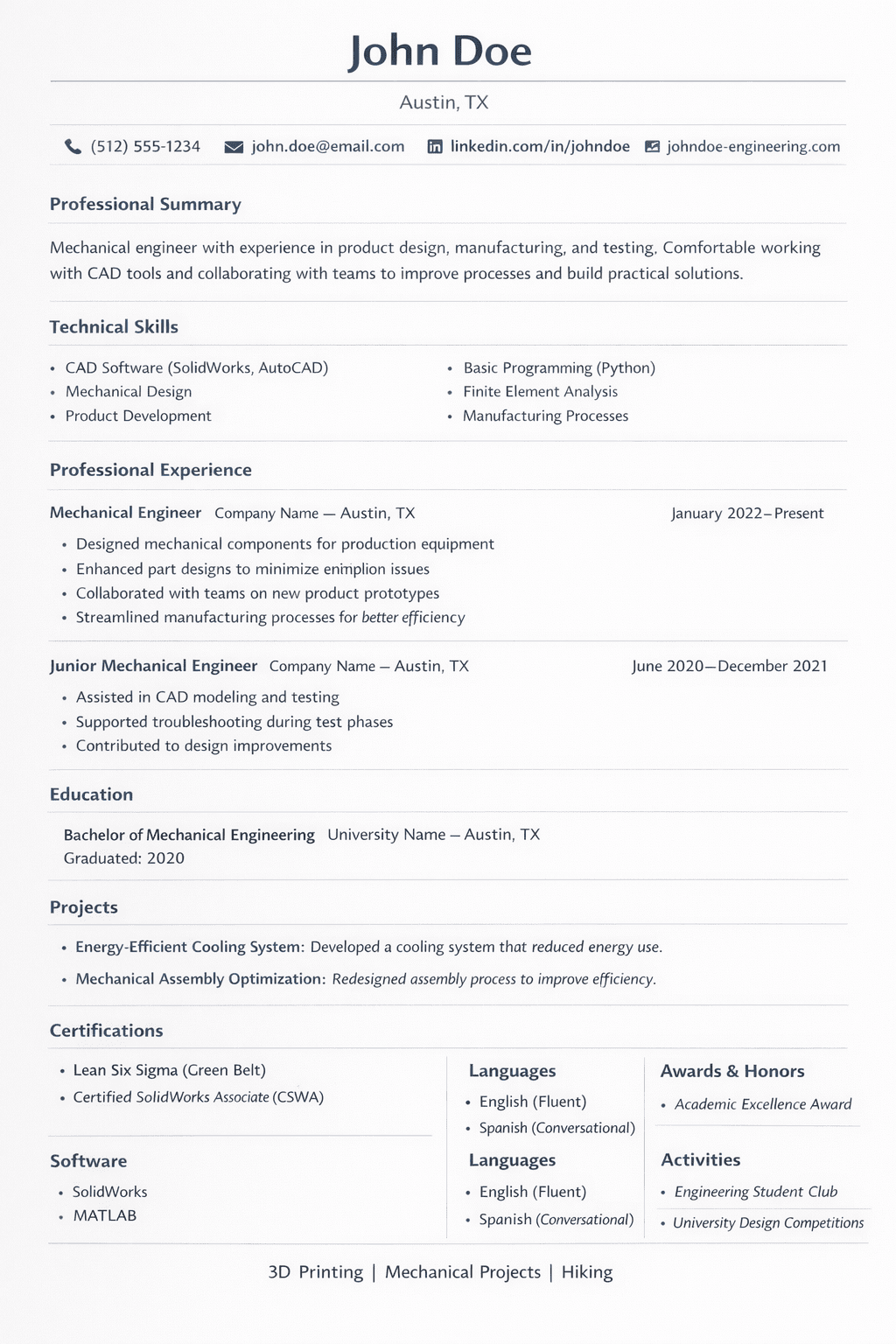
If you need a guidance, use our mechanical engineer resume example for inspiration, then upload your CV or start from scratch.
Final Tips Before Submitting Your Resume
At the end of the day, your resume doesn’t need to be complicated — it just needs to be clear and honest about what you bring to the table.
Focus on showing real experience, even if it comes from projects or university work. Keep the layout clean so it’s easy to scan, and make small adjustments depending on the job you’re applying for. A few thoughtful changes can make a big difference.
Before sending it out, take a minute to review everything. Fix any small mistakes, remove anything that feels unnecessary, and make sure your strongest points stand out.
A good resume should quickly answer three simple questions: what you’ve done, what you’re good at, and why you’re worth considering. If it does that well, you’re already ahead of most applicants.
Marija K.
LinkedIn ↗Legal Consultant & HR Specialist
Marija is a seasoned legal consultant and HR specialist with a passion for helping professionals craft standout CVs and navigate complex career transitions.
Ready to tailor your resume?
Let AI match your resume to any job description in seconds — and land more interviews.
Get started free →