
Create & Apply
Analyze & Prepare
Free Tools
All Free Tools
Browse keyword extractor, ATS checker, bullet rewriter, and more
Keyword Extractor
Extract skills and keywords from any job description
ATS Resume Checker
Check resume keyword match against a job description
Bullet Rewriter
Rewrite resume bullets with stronger impact
Summary Generator
Generate professional resume summary variants
Build your perfect tailored CV
Join thousands of professionals landing more interviews with AI-powered resumes.
Popular Roles
See real resumes that get interviews
Browse examples across every industry and role to inspire your own.
Find your perfect template
Professionally designed layouts ready to tailor to any job.
Learn & Explore
June 26, 2026
·6 min read
Hobbies for Resume: When to Add Them and Which Ones Actually Work
Adding a hobbies section to your resume seems like a small decision, but it's one that trips up a lot of job seekers. Should you list them at all? Will they actually help, or just take up space that could go to your skills and experience?
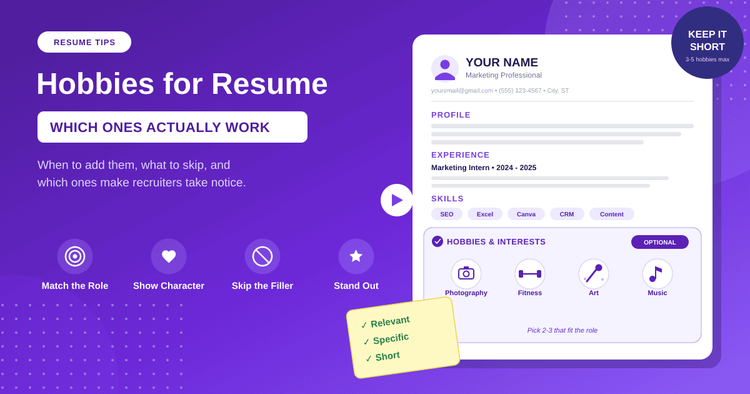
Adding a hobbies section to your resume seems like a small decision, but it's one that trips up a lot of job seekers. Should you list them at all? Will they actually help, or just take up space that could go to your skills and experience?
Here's the short answer: hobbies for resume sections can help, but only when you pick the right ones and use them the right way. This guide covers when to include hobbies, how to list them, and which ones are worth the space on your resume.
Should You Put Hobbies on Your Resume?
In most cases, a hobbies section is optional. It's not going to make or break your application the way your work experience and skills will, but it can give you an edge in a few specific situations.
Hobbies are worth including when they:
- Are relevant to the role. A photography hobby matters more for a marketing job than it does for an accounting one.
- Show a soft skill recruiters care about. Things like leadership, teamwork, discipline, or creativity.
- Point to a real achievement. Running a marathon or placing in a competition says more than just "I like running."
Hobbies are not worth including when they're passive, vague, or are in no way related to the job. "Watching TV" or "scrolling social media" won't tell a recruiter anything useful about you, so leave those off.
When to Include a Hobbies Section
Here are some cases where including your hobbies can be beneficial:
- You don’t have much work experience. Recent grads and people early in their careers can use hobbies to show initiative and character when their job history doesn't say much yet.
- The hobby connects directly to the job. A blogger applying for a content role, or a hiker applying to an outdoor gear company, has a natural fit worth mentioning.
- You're changing careers. Hobbies can bridge the gap and show you already have habits and interests that fit your new direction.
- You want to round out your application. If your resume already covers your skills and experience well, a short hobbies section can add a bit of personality without taking anything away.
How to List Hobbies on Your Resume
If you decide to include hobbies, keep the section short and easy to scan. Always place hobbies at the bottom, after your experience, education, and skills, and stick to 3-5 hobbies at most.
And remember: a short phrase is enough – you don't need full sentences here. Here's what a simple hobbies and interests section should look like:
Hobbies and Interests
- Rock climbing
- Volunteer tutoring
- Amateur photography
- Chess
Pro tip: If a hobby ties directly into the job you want, you can add a few words of context. For example, “Volunteer tutoring (mentored 10+ high school students in math).”
Best Hobbies for a Resume, Sorted by Skill
Hobbies That Show Creativity
- Photography
- Drawing or painting
- Creative writing
- Music or songwriting
- Graphic design
- Pottery or ceramics
- Crafting or DIY projects
Hobbies That Show Leadership and Teamwork
- Coaching a youth sports team
- Volunteering with a local organization
- Organizing community events
- Team sports like soccer or basketball
- Leading a club or student group
- Mentoring or tutoring
Hobbies That Show Analytical Thinking
- Chess
- Puzzles or logic games
- Coding side projects
- Strategy board games
- Investing or personal finance tracking
- Debating
Hobbies That Show Discipline and Drive
- Running or marathon training
- Martial arts
- Yoga
- Learning a new language
- Playing a musical instrument
- Weightlifting
Hobbies That Show Care for Others
- Volunteering at a shelter or food bank
- Animal rescue or fostering
- Fundraising for a cause
- Mentoring students or new employees
You don't need to pick from every category. Choose two or three hobbies that match the role and the impression you want to leave.
Hobbies to Leave Off Your Resume
Some hobbies do more harm than good on a resume. Skip these:
- Passive activities like watching TV, browsing social media, or napping. They don't say anything about your skills.
- Anything political or religious, unless it's directly tied to the job itself.
- Risky or extreme activities that could make an employer worry about your availability or safety, like skydiving or motorsports, unless the role calls for that kind of profile.
- Vague one-word hobbies with no context, like just “reading” or “music.” If you want to include them, add a detail that makes them specific, such as "reading historical nonfiction" or “playing guitar in a local band.”
When in doubt, ask yourself if the hobby tells a recruiter something useful about how you'd perform on the job. If the answer is no, it probably doesn't belong on your resume.
Hobbies for a Resume With No Experience
If you're a student or recent grad with little to no work history, hobbies can help fill that gap and show who you are beyond your degree. Good options include:
- Volunteering or community service
- Leading a student club or organization
- Freelance or personal creative projects
- Sports, especially team sports with a leadership angle
- Coding or building personal projects
- Tutoring or peer mentoring
Pair these with any part-time jobs, internships, or coursework you have, and you'll be able to fill even a resume with no experience.
Generate a Ready-Made Resume with TailoredCV.ai
A hobbies section doesn’t matter if the rest of your resume isn’t tailored to the job, and that's where TailoredCV comes in.
You have two easy ways to get started:
- Let AI build your resume from scratch. Just enter your background and the job you're applying for, and TailoredCV will generate a complete, tailored resume in seconds, hobbies section included if you want one.
- Start from a template. Browse TailoredCV's resume templates and pick a design you like, then let the AI fill in and tailor the content to match the job description.
Either way, you'll end up with a resume that's tailored to the role, formatted to pass ATS, and ready to send. No more guessing whether your hobbies section, or anything else on the page, is helping or hurting your chances.
FAQ: Hobbies for Resume
What are good hobbies and interests for a resume?
The best ones connect to a skill the job needs or show a real achievement. Volunteering, sports, creative projects, and coding side projects are common choices that work across most industries.
What are 5 hobbies you should put on a resume?
A balanced list might include one creative hobby, one that shows leadership or teamwork, one that shows discipline, one analytical hobby, and one that's relevant to the specific job. For example: photography, coaching a youth team, running, chess, and volunteering.
Should I include hobbies if I don't have any "impressive" ones?
Yes, as long as they're genuine and you can describe them in a few specific words. A simple hobby like cooking or gardening is fine if you frame it clearly, like “cooking (meal prep and recipe development)” instead of just “cooking.”
Marija K.
LinkedIn ↗Legal Consultant & HR Specialist
Marija is a seasoned legal consultant and HR specialist with a passion for helping professionals craft standout CVs and navigate complex career transitions.
Ready to tailor your resume?
Let AI match your resume to any job description in seconds — and land more interviews.
Get started free →